
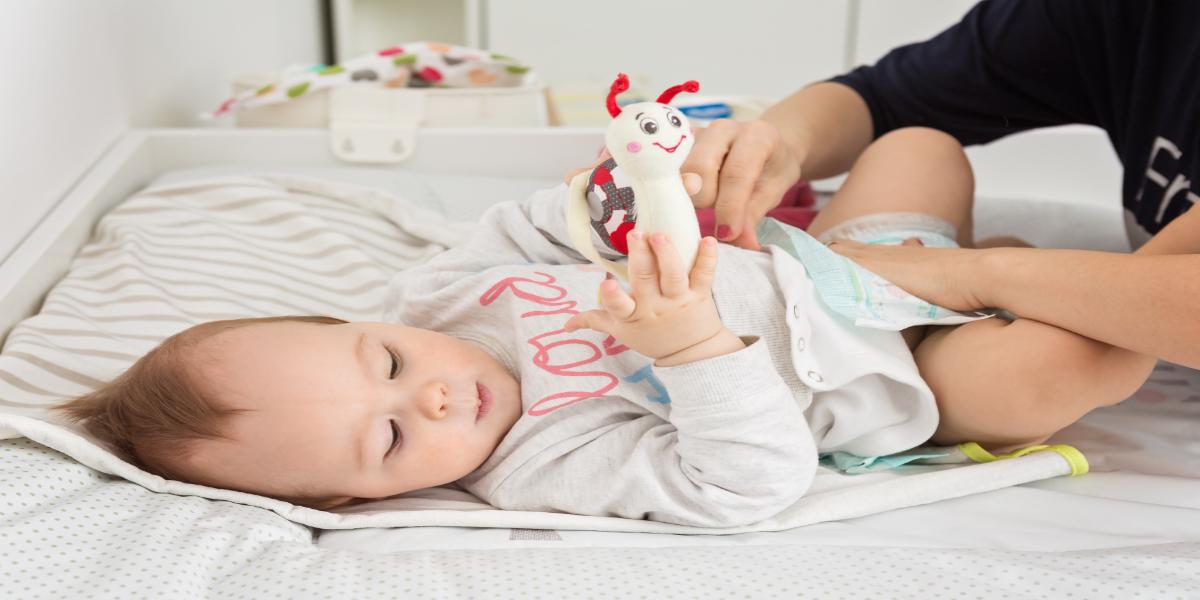
Many newborns look like they are in real trouble when they try to have a bowel movement. They strain, grunt, cry, turn red, and flail their legs, sometimes for 10 to 20 minutes, only to produce a perfectly soft stool at the end. This pattern is called infant dyschezia, and despite how it looks, it is not constipation, and it is not something you need to treat. The crying comes from effort and frustration, not pain. Once the stool passes, the baby is comfortable again. It is a normal coordination problem that resolves on its own. This handout covers how to recognize it, what not to do, and the findings that mean it is something else.
Key Takeaways
- Infant dyschezia is straining and crying for at least 10 minutes before passing a soft stool, in an otherwise healthy infant under 9 months of age.
- The stool, once it arrives, is soft. Dyschezia is not constipation.
- The cause is normal: the baby has not yet coordinated the relaxation of the pelvic floor with the push of the abdominal muscles.
- No treatment is needed. Most babies sort this out within a few weeks to a couple of months. By 9 months it has resolved.
- Do not use rectal stimulation, thermometers, or suppositories. They can delay normal learning and make the problem more persistent.
What You’ll See
- Straining, grunting, and crying for 10 or more minutes before a bowel movement.
- Turning red or purple in the face.
- Stiffening the legs or pulling them up.
- Looking uncomfortable, even distressed.
- A soft, normal-looking stool at the end of the effort.
- Baby is otherwise feeding well, gaining weight, and acting normally between episodes.
Why It Happens
Having a bowel movement requires two coordinated moves: contracting the abdominal muscles to push, and relaxing the pelvic floor muscles to open the way out. Young infants often do the first without the second. Until the coordination clicks, the baby works very hard to get a very soft stool out. The learning happens on the baby’s own schedule. It is not something you can train.
Dyschezia vs. Constipation
Constipation means hard, pellet-like or difficult-to-pass stools. Dyschezia produces a soft stool after the effort. Those are very different problems and have very different management. If the stool that eventually arrives is hard, dry, or looks like small round pellets, that is not dyschezia.
What Can Help (Gentle, Low-Key)
- Hold your baby calmly during the effort. Your calm is more useful than any maneuver.
- Gentle clockwise tummy massage between episodes.
- Leg cycling: lightly bicycle the legs for a minute or two.
- Bring the knees toward the chest for a moment, or place baby on their back with legs lifted, to mimic a squat position.
- A warm bath can relax a fussy baby, though it is not a specific treatment.
What to Avoid
- Rectal stimulation with a thermometer, Q-tip, or finger. Each use teaches the baby to wait for outside help instead of learning the coordination themselves, and can extend the duration of the problem.
- Glycerin suppositories, unless we specifically recommend them.
- Any laxative without a pediatrician’s guidance.
- Changes to a breastfed mother’s diet or changes in formula for this problem. It is not diet-related.
When to Call Us
- Stools are hard, dry, pellet-like, or streaked with bright red blood.
- No bowel movement in a newborn during the first 48 hours of life.
- A formula-fed baby with no bowel movement for 3 or more days, or any formula-fed baby who seems uncomfortable along with the delay.
- A breastfed baby with no bowel movement for 7 or more days beyond the newborn period, or who is also fussy, feeding poorly, or not gaining weight.
- Poor feeding, vomiting (especially bile-colored or forceful), fever, or significant abdominal distension.
- Symptoms that persist beyond 9 months of age.
- Any concern at all that the baby is genuinely in pain rather than simply straining.
Bottom Line
Infant dyschezia looks worse than it is. The soft stool at the end is your reassurance. Let your baby do the work, keep the bottom off-limits to instruments, and the problem will sort itself out on its own.
Call ELP at (727) 372-6760 or schedule online. Stay healthy my friends.
Sources
- Rome IV Diagnostic Criteria for Functional Gastrointestinal Disorders (Neonate/Toddler): Infant Dyschezia.
- American Academy of Pediatrics, HealthyChildren.org: articles on infant stooling patterns and constipation.
- NASPGHAN/ESPGHAN 2014 evidence-based recommendations for the evaluation and treatment of functional constipation in infants and children.
- Seattle Children’s / Schmitt Pediatric Guidelines: Stools, Unusual.


This seems just like my infant. He is 8 weeks old and tries to squeeze his abdomen several times daily to pass gas/poop. In doing so he forces himself to spit up. Is this something I should worry about?