Most cases of hand, foot, and mouth disease are mild and can be managed at home. This handout covers what to watch for, how to keep your child comfortable, and when to call the office.
What causes HFMD
HFMD is a viral illness in the enterovirus family. The historical cause was coxsackievirus A16. Since 2012, coxsackievirus A6 has been responsible for many cases in the United States and tends to produce a more widespread rash with higher fevers. Enterovirus A71 is another, less common cause. Rarely, EV-A71 can lead to neurologic complications. Call immediately for persistent vomiting, sudden jerking or startling, balance trouble, severe lethargy, or focal weakness. The illness spreads through saliva, respiratory droplets, stool, and surfaces that have been touched by an infected child. Daycare and preschool settings are the most common place to pick it up. In Florida, HFMD circulates year-round with summer and fall peaks.
Who gets HFMD
HFMD most often affects children younger than five years of age. Older children and adults can also catch it.
Typical course
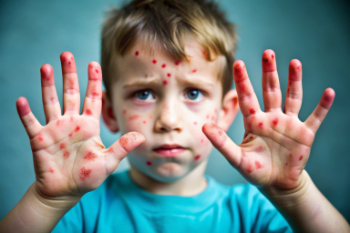
Expect a low-grade fever, sore throat, runny nose, and a drop in appetite for the first day or two. A rash follows, appearing as small red spots and tiny blisters. Classic locations are the palms, fingers, soles, and toes, with painful mouth ulcers on the tongue, cheeks, and gums. Blisters and spots may also appear on the buttocks, diaper area, arms, legs, or face, especially with the coxsackievirus A6 strain.
Fever lasts two to three days. Mouth sores clear by about seven days. The rash on the hands and feet resolves in around ten days. Peeling of the fingers and toes at one to two weeks is common and harmless. In a small number of cases, usually after the more severe form, a fingernail or toenail may fall off at four to eight weeks out. Nails grow back normally over several months.
Home care
Care is about comfort and hydration. No antiviral medicine treats HFMD.
Fluids come first.
Cold drinks, milkshakes, popsicles, slushes, and sherbet are preferred because cold helps numb mouth pain. For infants still on the bottle, the nipple can worsen mouth ulcer pain, so offering fluids by cup, spoon, or syringe can help. Fluid intake matters more than how much solid food your child takes in.
Soft, bland foods.
Good options include macaroni and cheese, mashed potatoes, yogurt, cereal with milk, ice cream, and applesauce. Avoid citrus, salty, and spicy foods because they sting the ulcers.
Pain and fever medicine.
For infants under three months of age, do not give acetaminophen, ibuprofen, or any other fever or pain medication at home. A rectal temperature of 100.4°F or higher, or signs that your infant looks ill, is inconsolable, is feeding poorly, or seems unusually sleepy, can be the first sign of a serious infection in this age group and needs to be evaluated by a clinician right away. Call the office immediately. If we are closed, take your infant to the nearest pediatric emergency department.
For infants three months and older, acetaminophen can be used at a weight-appropriate dose. Ibuprofen can be used in children six months and older at a weight-appropriate dose. If you are unsure of dosing for your child, call the office.
Liquid antacid for mouth pain (age 1 year and older).
A plain liquid antacid such as Mylanta or a store-brand equivalent can be used up to four times a day, particularly after meals. For ages one through six, place a few drops in the mouth or dab it on the sores with a cotton swab. For children over six, use one teaspoon as a mouth rinse, hold it on the ulcers as long as tolerated, then spit it out or swallow. Do not use regular mouthwashes. The alcohol makes them sting.
Blister care.
Blisters on the palms and soles generally do not open. Blisters elsewhere can open and the fluid is contagious, so keep the area clean and wash like normal skin. Covering is not necessary unless your child is scratching. In children with eczema, the rash can be considerably more widespread and weepy than the textbook picture and more contagious to other household members.
Do not use prescription numbing gels.
Do not use viscous lidocaine or any prescription numbing gel in young children, even if it has been prescribed in the past. The FDA warns these products can cause seizures or worse in this age group.
When to call the office
Any infant under three months with a rectal temperature of 100.4°F or higher should be seen. Call now, regardless of whether you suspect HFMD.
Call now, at any age, if your child shows signs of dehydration:
- No urine in more than eight hours, or very dark urine.
- No tears when crying.
- Very dry mouth or cracked lips.
- Unusual sleepiness or difficulty waking.
- Wet-diaper count cut in half from your child’s usual.
- Drooling uncontrollably from mouth pain, or unable to swallow well enough to drink fluids.
Call within 24 hours if:
- Fever lasts more than three days.
- Mouth ulcers spread to the outer lip.
- Gums are red, swollen, or tender.
- The rash spreads widely to the arms, legs, or face.
- The rash looks infected, with pus or spreading redness.
These mouth findings can suggest a different virus that we sometimes treat differently.
Call during office hours if a fingernail or toenail falls off, or if you have other questions.
Prevention
No HFMD vaccine is available in the United States. Vaccines against enterovirus A71 are used in some countries, primarily China, but none are licensed here. Good hygiene is the practical prevention:
- Wash hands thoroughly after diaper changes, bathroom visits, and nose wiping.
- Disinfect frequently touched items such as toys, doorknobs, and remotes.
- Do not share drinks, utensils, toothbrushes, or towels.
- Keep sick children home while they have a fever and until they can manage their own oral secretions and any open weeping blisters can be covered. See the Return to childcare or school section below for the full criteria.
Return to childcare or school
Your child can return once the fever has been gone for at least 24 hours and they feel well enough to participate. Blisters do not need to be fully healed before returning. If your child is drooling uncontrollably from mouth sores, or has weeping blisters that cannot be covered, keep them home until those symptoms improve. Virus can continue to shed in stool for weeks to months, so hand hygiene remains important even after the rash has cleared.
Newborn or pregnant household member
Enterovirus exposure can occasionally cause serious illness in a newborn. If you have a newborn at home or someone in their third trimester of pregnancy, and another child has HFMD, call us about exposure precautions.
If you are not sure
If something does not seem right, or your child is not keeping fluids down, call the office. We would rather hear from you early.
Sources
- American Academy of Pediatrics, HealthyChildren.org: Hand, Foot and Mouth Disease (AAP Section on Infectious Diseases, last updated December 2025).
- Seattle Children’s Hospital / Schmitt Pediatric Guidelines: Hand-Foot-and-Mouth Disease: Viral Rash (last reviewed May 2025, last revised March 2025).